
About Landscape Lighting Transformers
A low voltage transformer is at the heart of every landscape lighting system. It converts 120 volt current to a low voltage current (between 12-15 VAC). The efficiency of this conversion determines how well the transformer controls the voltage output and how much energy is consumed in the process. VOLT® transformers are the most efficient multi-tap low voltage transformers in the industry, providing high performance and energy savings. With high-quality toroidal cores as well as robust wiring and internal components, these transformers provide a highly stable source of current with very low energy consumption.
Magnetic transformers use two coils to reduce the voltage from 120 volt down to 12 volts. The primary coil carries the line voltage (108V to 132V). The flow of electricity through the primary coil induces a magnetic field that creates a current in the secondary coil. Since the secondary coil has 1/10th the number of windings, it creates a current with 1/10th the voltage. There are two types of magnetic landscape lighting transformers. These vary by the type of core:
- Laminated/stacked cores (also know as EI type). Laminated or stacked windings have sheets wrapped in copper wire that are then stacked or laminated together to make a core. This is the more common, less expensive method for manufacturing a core. These are less efficient, run hotter and are noisier than toroidal cores.
- Toroidal cores. These are one solid unit shaped like a donut and have the windings wrapped around the donut, in and out of the donut hole. Toroidal cores are more efficient, experience less buzz and run cooler but are more expensive to make. Lighting systems with relatively high loads - such as 10 or more fixtures - benefit the most from toroidal cores. VOLT® toroidal cores are more energy-efficient, quieter and cooler than EI laminated-types. This is especially important for larger capacity transformers.
Electronic transformers convert the 120-volt current to 12 volts by first increasing the frequency of the current from 60 Hz to as high as 20,000 Hz. The increased frequency allows the use of a miniature core enabling the transformer to be very small, light and inexpensive. The biggest downsides are (1) their high-frequency current may not be compatible with LED circuits, (2) these currents also suffer from extensive voltage loss compared to magnetic types, (3) a 12-volt electronic transformer must be positioned within about 10 feet of the fixture and (4) electronic transformers are subject to overheating and premature failure.
It depends on the total wattage of your lights and the maximum draw of your transformer. We recommend not exceeding 80% of the transformer's capacity.
With our professional-grade transformers, outdoor lighting installers are able to compensate for voltage drop by using higher voltage terminals so that all lights receive appropriate voltage. Use one of these VOLT® transformers to ensure that your low voltage landscape lighting system runs at optimal efficiency for a lifetime.
- VOLT® Slim Line LED Transformers have either a single 15V voltage tap (100W) or both a 12V and 15V tap (150W and 300W)
- VOLT® Series Transformers feature 12V, 13V, 14V and 15V voltage taps .
- VOLT® PRO Series Transformers feature voltage taps from 12V through 22V.
- VOLT® Clamp-Connect™ Series Transformers are specifically designed for LED systems and feature the exceptional clamp-type terminal blocks for fast and secure connections. These transformers have 12V and 15V taps, because LED systems accommodate a wide range of acceptable voltage.
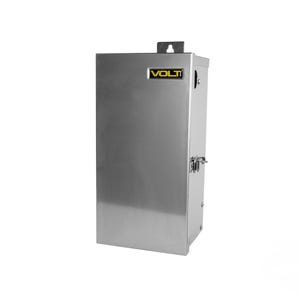 VOLT® Clamp-Connect 150 Watt (12v/15v) Multi-Tap Low Voltage Transformer
From $204.97
Exclusive VOLT® Innovation! 150W Clamp-Connect 12v/15v LED Landscape Lighting Transformers - featuring easy-to-use clamp-type connectors.
Simply flip open the clamps to insert the wires then close them to make rock-solid connections - no tools needed. Save time and money with these transformers - you and your crew will love them!
Lifetime Warranty
Learn More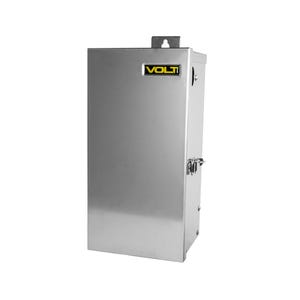 VOLT® Clamp-Connect 300 Watt (12v/15v) Multi-Tap Low Voltage Transformer
From $224.97
Exclusive VOLT® Innovation! 300W Clamp-Connect 12v/15v LED Landscape Lighting Transformers - featuring easy-to-use clamp-type connectors.
Simply flip open the clamps to insert the wires then close them to make rock-solid connections - no tools needed. Save time and money with these transformers - you and your crew will love them!
Lifetime Warranty
Learn More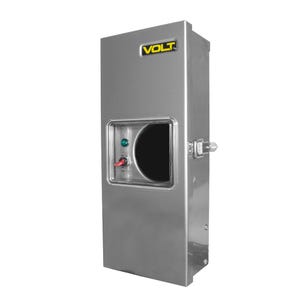 VOLT® 100 Watt Slim Line LED Transformer
As low as $139.97
Exclusive VOLT® Innovation! Groundbreaking 100W LED transformer for super-easy installation and control.
This new low-profile design with see-through window includes easy-to-use clamp-connects.
Lifetime Warranty
Patent Pending
Learn More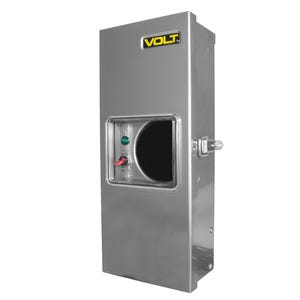 VOLT® 150 Watt Slim Line LED Transformer
From $189.97
Exclusive VOLT® Innovation! Groundbreaking 150W LED transformer for super-easy installation and control.
This new low-profile design with see-through window includes easy-to-use clamp-connects.
Lifetime Warranty
Patent Pending
Learn More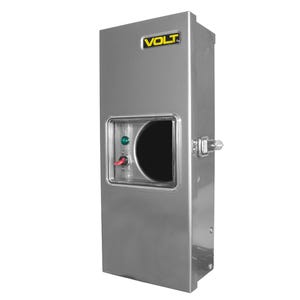 VOLT® 300 Watt Slim Line LED Transformer
From $209.97
Exclusive VOLT® Innovation! Groundbreaking 300W LED transformer for super-easy installation and control.
This new low-profile design with see-through window includes easy-to-use clamp-connects.
Lifetime Warranty
Patent Pending
Learn More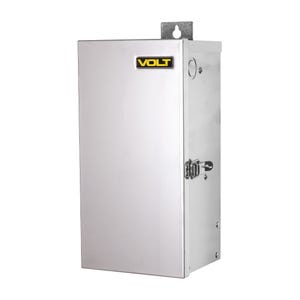 VOLT® 300 Watt (12v-15v) Multi-Tap Low Voltage Transformer
As low as $204.97
An ideal transformer for medium- to large-sized projects!
300W capacity with four voltage taps - 12V, 13V, 14V and 15V. Ideal for both halogen and LED light sources. Stainless steel cabinet with hinged lockable door. Timer and photocell receptacles.
Lifetime Warranty
Learn More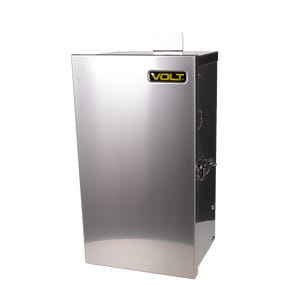 VOLT® 600 Watt (12v-15v) Multi-Tap Low Voltage Transformer
As low as $244.97
VOLT® 600 Watt (12v-15v) Multi-Tap Low Voltage Transformer for LED Landscape Lighting
Suitable for large projects, this 600-watt landscape lighting transformer is extremely durable and features top-of-the-line internal & external components. Designed to achieve professional results and commercial reliability, no other transformers on the market match the performance and features of this product.
Learn More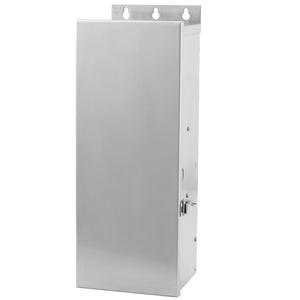 VOLT® Pro 900 Watt 12V-22V Multi-Tap Transformer
As low as $524.97
A professional 900W transformer for large systems - accommodates very long (or heavily loaded) wire runs!
900W capacity with nine voltage taps: 12V-22V. Ideal for both halogen and LED light sources. Stainless steel cabinet with hinged lockable door. Timer and photocell receptacles. Magnetic toroidal core.
Lifetime Warranty
Learn More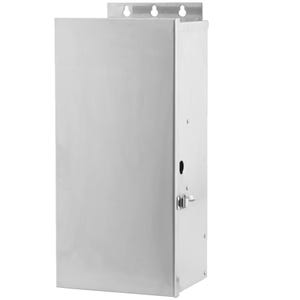 VOLT® Pro 1200 Watt 12v-22v Multi-Tap Transformer
As low as $639.97
A professional 1200W transformer for very large projects - accommodates very long (or heavily loaded) wire runs!
1200W capacity with seven voltage taps: 12V-22V. Ideal for both halogen and LED light sources. Stainless steel cabinet with hinged lockable door. Timer and photocell receptacles. Magnetic toroidal core.
Lifetime Warranty
Learn More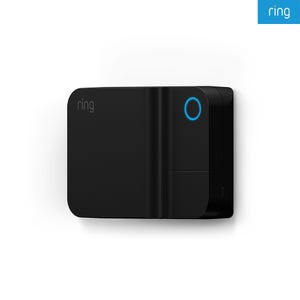 Ring Smart Lighting 200 Watt Low Voltage Transformer$109.97
With its advanced features and seamless integration with the Ring ecosystem, this smart transformer brings convenience, control, and security to your outdoor space.
The Ring Smart Lighting 200 Watt Low Voltage Transformer is not just about convenience; it's also about safety and peace of mind. Using quick connect terminals, easily begin controlling your lights through your phone, tablet, or Alexa-enabled device.
Learn More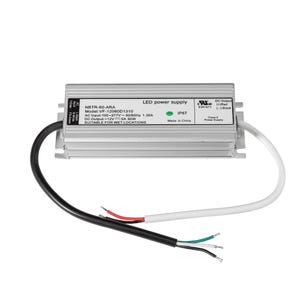 VOLT® 60W Inline Power Converter (120VAC to 12V DC)$44.97
Inline power converter designed for converting electricity from line-voltage (120VAC) to low-voltage (12V DC).
Durable, compact aluminum casing. Built-in mounting brackets for quick & easy installation. Ideal for remote outdoor locations or locations where line-voltage (120VAC) power lines already exist (kitchens, decks, or docks). UL and cUL Recognized.
5-Year Warranty
Learn More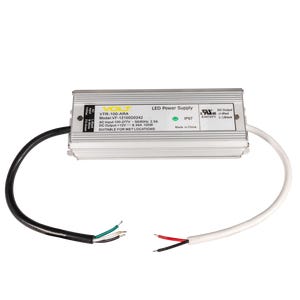 VOLT® 100W Inline Power Converter (120VAC to 12V DC)$59.97
Inline power converter designed for converting electricity from line-voltage (120VAC) to low-voltage (12V DC).
Durable, compact stainless steel casing. Built-in mounting brackets for quick & easy installation. Ideal for remote outdoor locations or locations where line-voltage (120VAC) power lines already exist (kitchens, decks, or docks). Safe to use with all VOLT low voltage fixtures. UL and cUL Recognized.
5 Year Warranty Learn More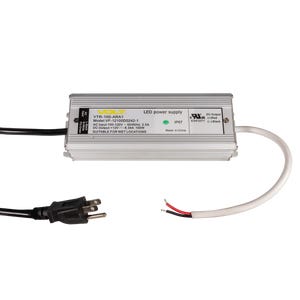 VOLT® 100W Inline Power Converter w/ Plug (120VAC to 12V DC)$64.97
Inline power converter designed for converting electricity from line-voltage (120VAC) to low-voltage (12V DC).
Durable, stainless steel casing. Built-in mounting brackets for quick & easy installation. Ideal for remote outdoor locations or locations where line-voltage (120VAC) grounded outlets already exist (kitchens, decks, or docks). Safe to use with all VOLT low voltage fixtures. UL and cUL Recognized.
5-Year Warranty
Learn More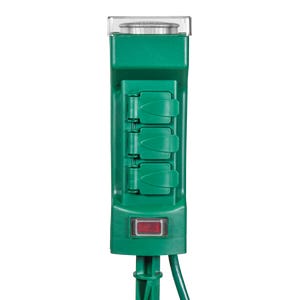 VOLT® 120V 6-Outlet Outdoor Power Stake with Timer$19.97
6-outlet outdoor power stake with a built-in mechanical timer.
Ideal for seasonal use for controlling Christmas lights or bistro lights. The stake is waterproof and is equipped with outlet covers.
Lifetime Warranty
ETL Listed
Learn More